6545 S Fort Apache Rd Ste 110, Las Vegas, NV 89148

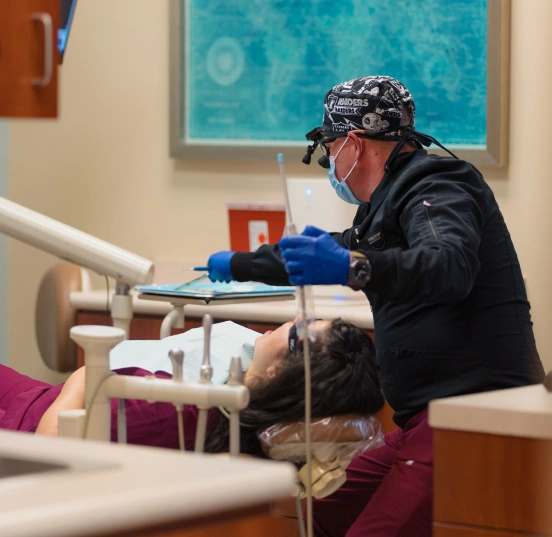
Saving a Tooth Instead of Losing It
When decay or infection reaches deep inside a tooth, the pain can be intense, and the instinct for many patients is to assume the tooth is beyond saving. In reality, root canal therapy exists precisely for this situation, treating the infection at its source while preserving the natural tooth structure that would otherwise need to be extracted.
Despite its reputation, modern root canal therapy is a routine, well tolerated procedure that relieves pain rather than causing it. At Precision Dental, treatment is approached with a focus on comfort and precision, helping patients keep their natural tooth for years to come.
Request an Appointment
What Root Canal Therapy Actually Involves
Inside every tooth, beneath the hard outer enamel and dentin layers, is a soft tissue called the pulp, made up of nerves, blood vessels, and connective tissue. When a tooth develops a deep cavity, a crack, or trauma that allows bacteria to reach this inner pulp, an infection can take hold, leading to significant pain, sensitivity, and swelling if left untreated.
Root canal therapy addresses this infection by removing the damaged or infected pulp from inside the tooth, thoroughly cleaning and disinfecting the empty canal, and then sealing it to prevent future infection. Once the internal treatment is complete, the tooth is typically restored with a filling or, more commonly, a crown, which protects the tooth and restores it to normal function.
The name "root canal" actually refers to the natural canal or channel inside the tooth's root that houses this pulp tissue, not the procedure itself, though the term has come to describe the entire treatment. Despite the anxiety many patients associate with the phrase, the procedure itself is designed specifically to relieve the pain caused by the infection, not create it.
Signs a Tooth May Need Root Canal Therapy
- Persistent or severe tooth pain, especially pain that lingers well after eating or drinking something hot or cold, can indicate the pulp inside a tooth has become infected or inflamed.
- Sensitivity to temperature that does not resolve quickly is often a sign that the nerve inside a tooth is affected, rather than simple surface sensitivity.
- Swelling or tenderness in the gums near a specific tooth can point to an infection that has spread beyond the tooth itself.
- A darkening or discoloration of a single tooth may indicate the pulp inside has been damaged, even without noticeable pain.
- A small bump on the gums, sometimes called a gum boil, can be a sign of an abscess forming near the root of an infected tooth.
- Pain when biting or applying pressure to a specific tooth often signals inflammation or infection reaching the root.
Not every case involves obvious symptoms, which is why some infections are only discovered during a routine exam or x-ray, reinforcing the importance of regular dental checkups.
What Actually Happens During Treatment
Root canal therapy is typically completed in one to two visits, depending on the severity of the infection and the complexity of the tooth's root structure.
Who Needs Root Canal Therapy
Root canal therapy is generally recommended for patients experiencing:
- Deep decay that has reached the inner pulp of the tooth
- A cracked or fractured tooth that has exposed the pulp to bacteria
- Repeated dental procedures on the same tooth that have affected the pulp over time
- An injury to a tooth that has damaged the nerve, even without a visible crack
- Signs of infection or abscess near the root of a tooth, as confirmed by exam or x-ray
An evaluation, including x-rays, helps confirm whether root canal therapy is the appropriate treatment or whether the tooth's condition calls for a different approach.
Relief Is Closer Than You Think
Tooth pain from a deep infection does not have to mean losing the tooth. Root canal therapy offers a reliable way to eliminate the source of pain while preserving the natural tooth for years to come.
Request an Appointment