6545 S Fort Apache Rd Ste 110, Las Vegas, NV 89148

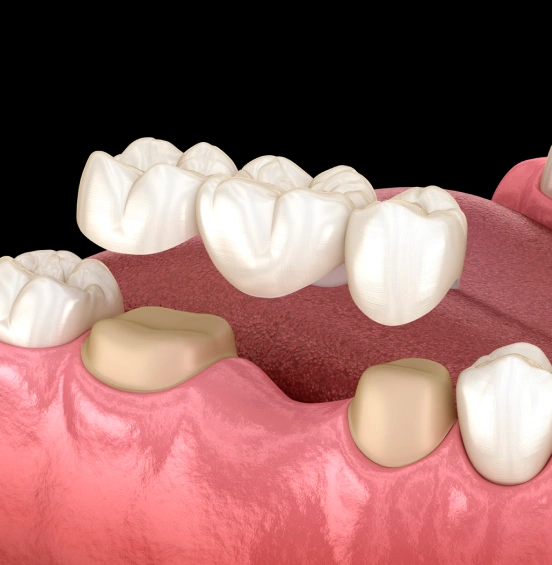
Closing the Gap a Missing Tooth Leaves Behind
Losing a tooth affects far more than appearance. It can change the way food is chewed, place extra strain on neighboring teeth, and even allow surrounding teeth to gradually shift out of position over time. A dental bridge addresses these issues by literally bridging the space where one or more teeth used to be, restoring both the look and function of a complete smile.
Unlike removable options, a bridge is fixed permanently in place, anchored to the natural teeth or implants on either side of the gap. For patients missing one or a few teeth in a row, a bridge often provides a stable, long lasting solution without the daily removal and cleaning routine that comes with a removable partial denture.
Request an Appointment
What a Dental Bridge Actually Is
A dental bridge is a fixed dental restoration made up of two main parts: the pontic, which is the artificial tooth or teeth filling the gap, and the abutments, which are the crowns placed on the natural teeth or implants on either side that anchor the bridge securely in place. Together, these pieces form a single, connected restoration that is cemented or attached permanently, rather than one that can be taken in and out.
Bridges are typically made from materials such as porcelain fused to metal or all ceramic materials, chosen to closely match the color, shape, and translucency of natural teeth. Because a bridge is supported by the surrounding teeth or implants, it distributes biting force much like natural teeth do, allowing patients to eat a full range of foods with confidence rather than working around a missing tooth.
There are a few different types of bridges, including traditional bridges supported by natural teeth on both sides, cantilever bridges supported by a tooth on only one side, and implant supported bridges anchored by dental implants rather than natural teeth. The right option depends on the number of missing teeth, the condition of the surrounding teeth, and overall oral health.
Why a Missing Tooth Should Not Be Left Untreated
A gap from a missing tooth rarely stays the same over time, which is one of the main reasons bridges are recommended sooner rather than later:
- Neighboring teeth begin to shift. Without a tooth in place to hold the position, adjacent teeth can gradually tilt or drift into the empty space, leading to bite misalignment.
- Opposing teeth can over-erupt. A tooth in the opposite jaw with nothing to bite against can slowly shift out of its socket, affecting the overall bite over time.
- Chewing efficiency declines. Missing teeth make it harder to chew certain foods properly, which can affect both nutrition and comfort.
- Facial structure can be affected. Multiple missing teeth over time can contribute to a sunken appearance in the surrounding facial area.
- Bite alignment becomes uneven. As surrounding teeth shift, the way the upper and lower teeth meet can change, sometimes leading to jaw discomfort or uneven wear.
The Process of Getting a Dental Bridge
Getting fitted for a dental bridge typically takes place over a couple of visits, allowing time for careful preparation and a precise fit.
Who Benefits Most From a Dental Bridge
A dental bridge tends to be a strong option for patients who are missing one or a few teeth in a row and have healthy, stable teeth on either side of the gap to serve as support. It is often considered alongside dental implants, and the right choice frequently comes down to a few key factors:
- The number of consecutive missing teeth involved
- The strength and health of the teeth or bone surrounding the gap
- Whether the patient prefers a fixed, non-removable option over other alternatives
- The condition of nearby teeth, since a bridge requires reshaping the abutment teeth to hold the crowns
Patients who are not good candidates for implants, whether due to bone density, health considerations, or personal preference, often find a bridge to be an effective and reliable alternative.
Restore a Complete, Confident Smile
A missing tooth does not have to be a permanent disruption to your bite, your comfort, or your smile. A dental bridge offers a fixed, natural looking way to restore what was lost and prevent further complications down the road.
Request an Appointment