6545 S Fort Apache Rd Ste 110, Las Vegas, NV 89148

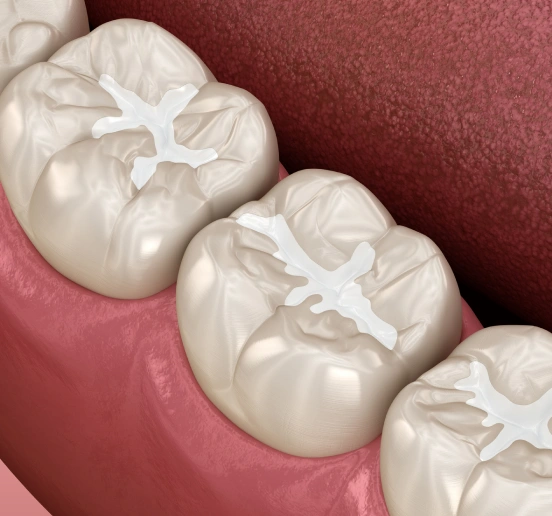
An Extra Layer of Cavity Protection
The chewing surfaces of your back teeth are covered in tiny grooves and pits, the perfect hiding spot for food particles and bacteria. Even with regular brushing, these deep grooves can be difficult to clean completely, making molars especially prone to decay.
Dental sealants offer a simple solution. This thin, protective coating is applied directly to the chewing surface of the tooth, sealing out plaque and food debris before they have a chance to cause a cavity. It is a quick, painless, and highly effective way to add an extra layer of defense to your smile.
Request an Appointment
What Are Dental Sealants?
Dental sealants are a thin, protective coating made from a tooth colored resin material. They are applied directly to the chewing surfaces of your back teeth, typically the molars and premolars, where deep grooves and pits make it easiest for bacteria and food particles to get trapped.
Unlike fillings, which repair a tooth after decay has already occurred, sealants work proactively. Once applied, the sealant bonds to the natural grooves of the tooth, creating a smooth, protective barrier that keeps out plaque and bacteria before a cavity has the chance to form. The material is durable, virtually invisible once applied, and does not affect the way your teeth look or feel when biting and chewing.
Sealants are one of the most straightforward and effective tools in preventive dentistry, offering meaningful protection with a process that takes only a few minutes per tooth.
Who Is a Good Candidate for Dental Sealants?
Dental sealants are commonly recommended for:
- Children and teenagers, as soon as their permanent molars come in
- Adults without existing fillings or decay in their molars
- Patients who are more prone to cavities due to diet, oral hygiene habits, or tooth shape
- Anyone with deep grooves or pits in their back teeth, regardless of age
Our dentist can evaluate your teeth during a routine exam to determine whether sealants are a good fit for your oral health needs.
How Dental Sealants Are Applied
Applying dental sealants is one of the quickest and most comfortable procedures in preventive dentistry. The entire process typically takes just a few minutes per tooth, with no downtime afterward.
Caring for Teeth With Sealants
Dental sealants are durable, but they still work best as part of a complete oral care routine. To help your sealants last:
- Continue brushing twice daily and flossing regularly
- Avoid chewing on hard objects like ice or pens, which can chip the sealant
- Keep up with routine dental checkups so our dentist can monitor the sealant's condition
- Let our dentist know if you notice any rough edges or if a sealant feels like it has worn away
With good care, sealants can provide reliable protection for several years before needing to be reapplied.
Give Your Smile Extra Protection
Dental sealants are a simple, effective way to help prevent cavities before they start. Ask our team if sealants are right for you or your child at your next visit.
Request an Appointment